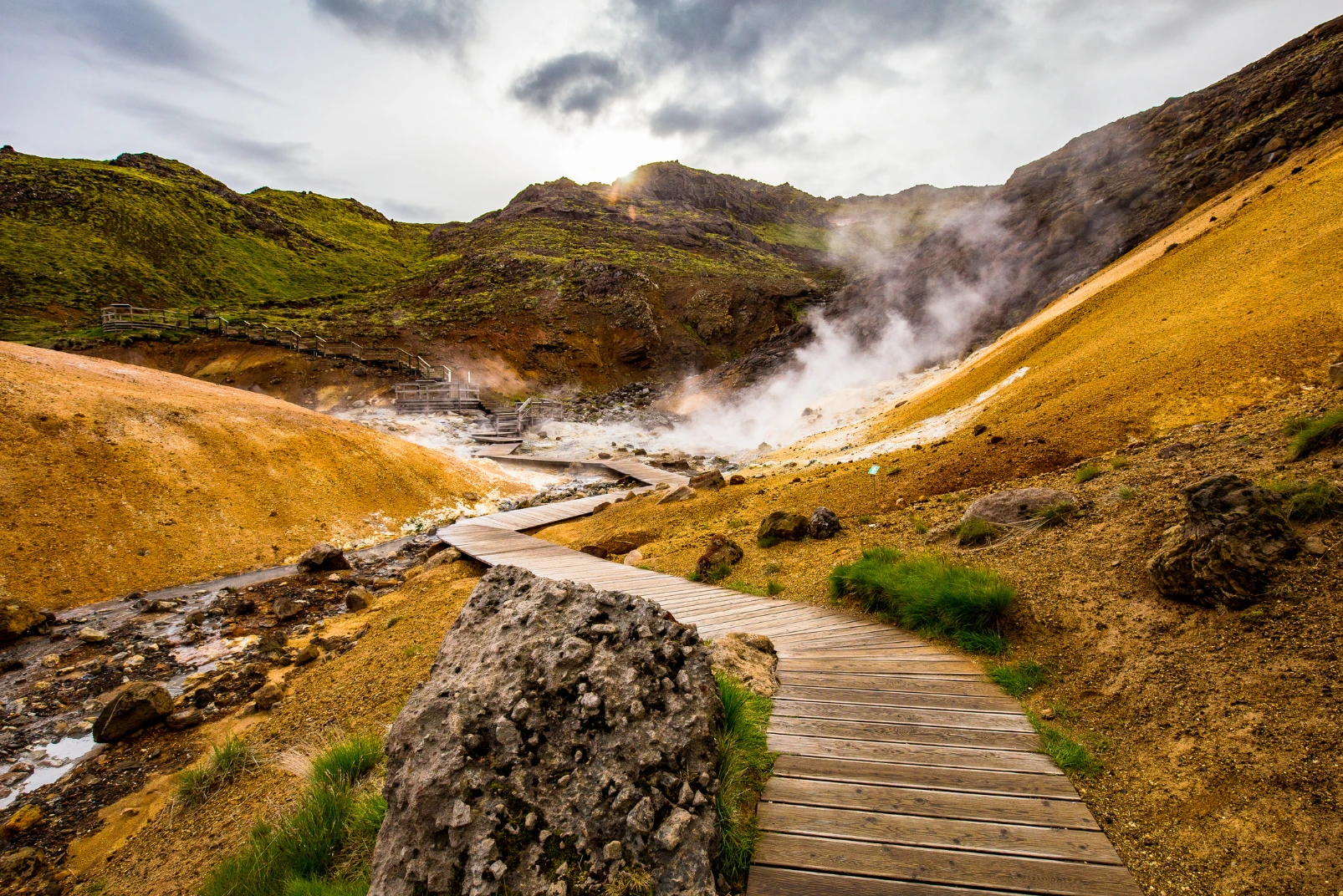
Research on learning and memory has long supported what many educators instinctively know: knowledge encountered in context tends to stick more durably than knowledge encountered in the abstract. Outdoor education activities tap into this principle directly — placing students in the environments, landscapes, and community spaces that give curriculum content its real-world meaning. This guide surveys the most effective categories of outdoor education activities, the cognitive and developmental mechanisms behind their value, and the practical approaches that make them work for educators at every level.
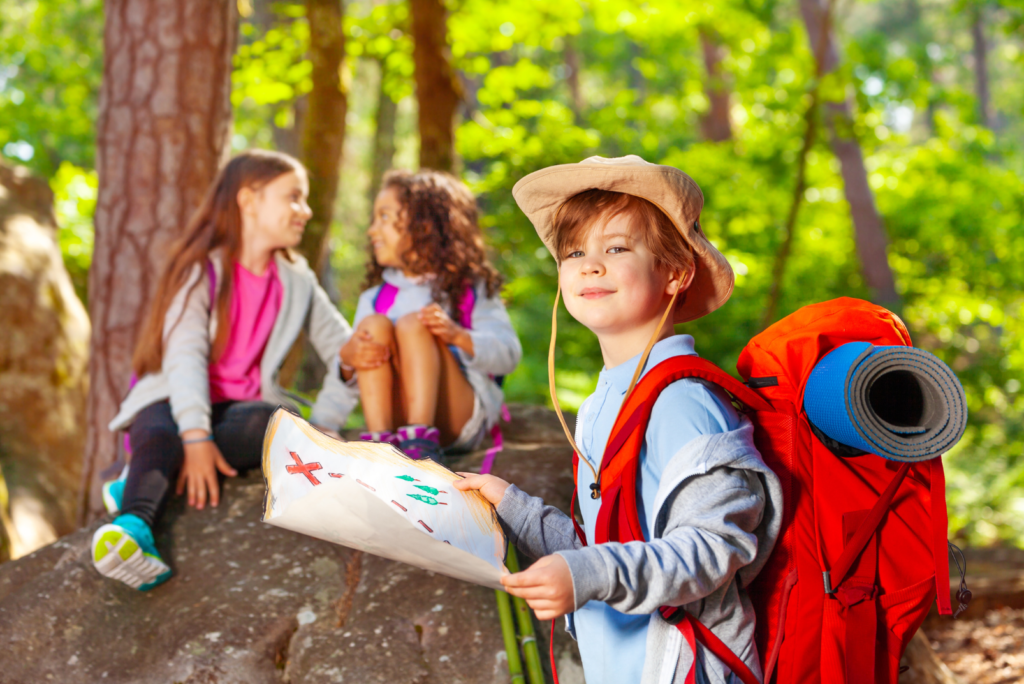
Why Outdoor Education Works: The Evidence
The case for outdoor education is not primarily intuitive — it is empirical. Decades of research in environmental education, experiential learning theory, and developmental psychology converge on a consistent finding: direct physical engagement with real-world environments produces stronger knowledge retention, greater motivation, and broader skill development than equivalent classroom instruction. A 2025 review in Frontiers in Education confirmed that gamified outdoor learning experiences — where structured challenges are embedded in physical environments — produced higher engagement scores and more durable conceptual understanding than control groups receiving the same content indoors.
The mechanisms behind this are reasonably well understood. Embodied cognition research demonstrates that physical movement and sensory engagement activate broader networks of memory encoding than passive reception of information. Place-based learning theory argues that knowledge encountered in context — at the actual site of a geological formation, a historical event, or an ecological transition — is more richly encoded and more readily retrieved than equivalent knowledge encountered in the abstract. And self-determination theory predicts that learning environments that support autonomy, competence, and social connection produce stronger intrinsic motivation — conditions that well-designed outdoor education activities reliably create.
Core Categories of Outdoor Education Activities
Nature-Based Science and Environmental Exploration
The natural environment is the most direct outdoor classroom available to most schools. Science curricula that require students to observe, measure, classify, and analyze — biology, ecology, earth science, environmental studies — are all enriched by direct contact with the phenomena being studied. A lesson on plant adaptation lands differently when students are examining the actual specimens rather than photographs in a textbook. A unit on watershed ecology is more meaningful when students are collecting and testing water samples at a real stream.
Structured outdoor science activities give students a clear investigative task tied to observable phenomena. Biodiversity surveys, soil composition analysis, phenology observations (tracking seasonal change over time at a fixed site), and microclimate measurement exercises all translate directly from curriculum content to hands-on field practice. The key is providing enough structure to focus the investigation without eliminating the element of genuine inquiry — students should encounter something unexpected, form a question, and pursue it.
History and Heritage Education in Place
Historical knowledge is abstract by nature — it describes events and conditions that no longer exist. Outdoor education activities that place students at historically significant sites partially overcome this limitation by grounding the abstract in the concrete. A student standing in a preserved battlefield, a colonial settlement, or a decommissioned industrial site encounters the physical scale, the geography, and the material culture of the period in ways that classroom instruction cannot provide.
Structured activities at heritage sites typically combine observation tasks (document what you see that relates to the period under study), research tasks (connect what you observe to what you already know from class), and reflection tasks (what does being here tell you that the textbook did not?). When these activities are designed as sequential challenges across a site — a format that GPS-based platforms support particularly well — the investigative arc holds student attention across the duration of the visit rather than dissipating after the initial novelty.
Geography, Urban Studies, and Community Mapping
Urban and peri-urban environments are underused educational resources. Streets, parks, public buildings, infrastructure, and community spaces all embody the geographic, economic, and social concepts that appear in curriculum standards — and students move through them daily without examining them analytically. Structured outdoor activities that direct students to observe, document, and interpret their own environment connect school learning to lived experience in ways that are immediately meaningful.
Community mapping exercises, infrastructure audits, land use surveys, and environmental justice investigations all work at the neighborhood scale. Students with phones or tablets can document observations with photographs, collect GPS coordinates, and submit findings to a shared platform in real time. The resulting dataset — a collective map of student observations — functions both as a learning artifact and as a foundation for classroom analysis and discussion.
Physical Education and Movement-Based Learning
Outdoor physical education goes beyond the conventional field and track. Orienteering, trail design, cooperative outdoor challenges, and navigation activities all develop spatial reasoning, physical fitness, and collaborative decision-making simultaneously. These activities are particularly valuable for students who are disengaged from conventional PE formats — the problem-solving dimension of navigation and outdoor challenges activates different motivation than competitive sports.
Cross-curricular outdoor activities that combine physical movement with content from science, geography, or mathematics are increasingly common in schools that have adopted project-based learning frameworks. A navigation exercise that requires students to calculate distances, identify terrain features, and record observations simultaneously addresses PE, mathematics, and geography outcomes — a practical efficiency that outdoor settings make possible in ways that classroom instruction cannot easily replicate.
GPS-Based Scavenger Hunts and Digital Outdoor Challenges
Digital outdoor education activities — particularly GPS-triggered scavenger hunts and location-based challenge platforms — represent the most recent evolution of outdoor learning and one of its most scalable formats. Where traditional outdoor activities require significant preparation time, physical materials, and on-site facilitation, digital platforms allow educators to build, deploy, and monitor structured outdoor experiences from a single interface.

GPS-based outdoor activities anchor educational challenges to specific physical locations. Students or teams navigate to defined coordinates, where they encounter a task — a question about what they observe, a photograph to take, a problem to solve using information visible at the site. The challenge is delivered through a mobile app; responses are submitted digitally; progress is tracked in real time. For educators, this means less time managing logistics during the activity and more time available for facilitation, observation, and responsive instruction. TurfHunt by Locatify (turfhunt.locatify.com) is one of the platforms purpose-built for this format, used by schools and universities across multiple countries for field trips, campus explorations, and heritage site visits. A professor at Linnaeus University in Sweden described the approach as giving teachers the ability to create mobile learning experiences that integrate physical exercise, gaming, problem-solving, and information retrieval — a combination that classroom instruction addresses only partially.
Outdoor Education Activities by Age Group
Early Childhood (Ages 4–7)
Young children learn primarily through sensory exploration and play. Outdoor education activities at this stage should prioritize direct sensory engagement with natural materials — soil, leaves, water, insects, rocks — and introduce structured observation tasks that are concrete and achievable. Nature scavenger hunts that ask children to find items by color, texture, or shape (“find something rough,” “find something smaller than your thumb”) develop observation skills and vocabulary without requiring reading or writing.
The outdoor environment itself is the curriculum at this stage. Adult facilitation should ask open questions — “what do you notice?” “what do you think will happen if…?” — rather than directing attention toward predetermined answers. The goal is cultivating curiosity and sensory attentiveness, not content coverage.
Elementary and Middle School (Ages 8–13)
This age group has the cognitive capacity and physical stamina for more structured outdoor investigations. Nature journaling, field sketching, measurement activities, and guided ecological surveys all work well at this stage. Team-based outdoor challenges — where groups must collaborate to complete a series of tasks across a defined area — introduce social complexity alongside the academic content.
GPS-based scavenger hunts are particularly effective for this age group. The technology is intuitive for students who have grown up with smartphones, the team format encourages natural collaboration, and the sequenced challenge structure provides enough external scaffolding to sustain focus across a full field session. Educational themes can range from natural science observation to local history research to mathematical measurement, depending on curriculum context.
High School and Higher Education (Ages 14+)
Older students benefit from outdoor activities that assign genuine investigative responsibility. Rather than following a prescribed sequence of observations, high school and university students can be tasked with designing their own research questions within a defined outdoor context, collecting primary data, and analyzing and presenting findings. This format — closer to genuine fieldwork than a structured school activity — develops research skills that transfer directly to academic and professional contexts.

Higher education institutions have used GPS-based outdoor platforms for campus-scale research exercises, heritage site documentation projects, and community engagement programs. The platform handles the logistical layer — coordination, submission, data collection — freeing educators to focus on the intellectual challenge of the inquiry rather than the mechanics of managing a group across a large outdoor area.
Planning Effective Outdoor Education Activities: A Practical Guide
Align curriculum objectives first. Every outdoor activity should connect directly to at least one curriculum standard. The outdoor environment provides the context; the curriculum provides the purpose. Activities designed around compelling locations without clear curriculum alignment produce enjoyable experiences but not necessarily meaningful learning.
Prepare the site. Visit the location in advance. Identify safety considerations, verify that the planned activities are physically feasible in the space, and confirm any permissions or logistics needed. Surprises that could have been anticipated in advance consume instructional time and reduce the quality of the student experience.
Brief students before departure. Students who arrive at an outdoor site without context or clear task orientation take longer to engage productively. A 10-minute pre-activity briefing that explains the learning objectives, the format, and the expectations for participation significantly improves the quality of the outdoor experience.
Structure the experience without over-scripting it. The value of outdoor learning lies partly in its unpredictability — the unexpected specimen, the weather change, the community member who stops to answer a question. Leave room in the schedule for these moments. An outdoor activity that is scripted so tightly that no deviation is possible loses what makes it educationally distinctive.
Debrief thoroughly afterward. Outdoor education activities generate raw observational material that requires processing to become durable learning. A structured debrief — in the field immediately after, or in the subsequent class session — asks students to synthesize what they observed, connect it to prior knowledge, and identify questions raised. Without this step, the outdoor experience remains an event rather than becoming a learning outcome.
The Role of Technology in Outdoor Education
Technology in outdoor education is a means, not an end. A GPS platform that allows educators to build structured challenge sequences across a large outdoor area is valuable because it removes logistical friction and expands what is educationally achievable — not because technology is inherently preferable to paper and compass. The decision to use digital tools for outdoor education activities should be driven by whether they make the learning experience more effective, more equitable, or more manageable, not by novelty.
That said, GPS-based platforms have genuinely expanded the range of outdoor education activities accessible to educators without specialist outdoor training. Building a structured field investigation that guides 30 students independently through a heritage site, collects their observations, tracks their progress, and generates a summary dataset for classroom analysis — tasks that previously required significant expertise and logistical effort — can now be accomplished by a classroom teacher with a standard device and an afternoon of preparation. For schools looking to increase the frequency and scope of their outdoor education activities, these tools substantially lower the barrier to entry.
Related Reading
→ Creative Scavenger Hunt Clues for All Ages: A Complete Guide — turfhunt.com/blog/scavenger-hunt-clues
→ TurfHunt for Education — turfhunt.locatify.com/pricing-education